
Adjika. Light.
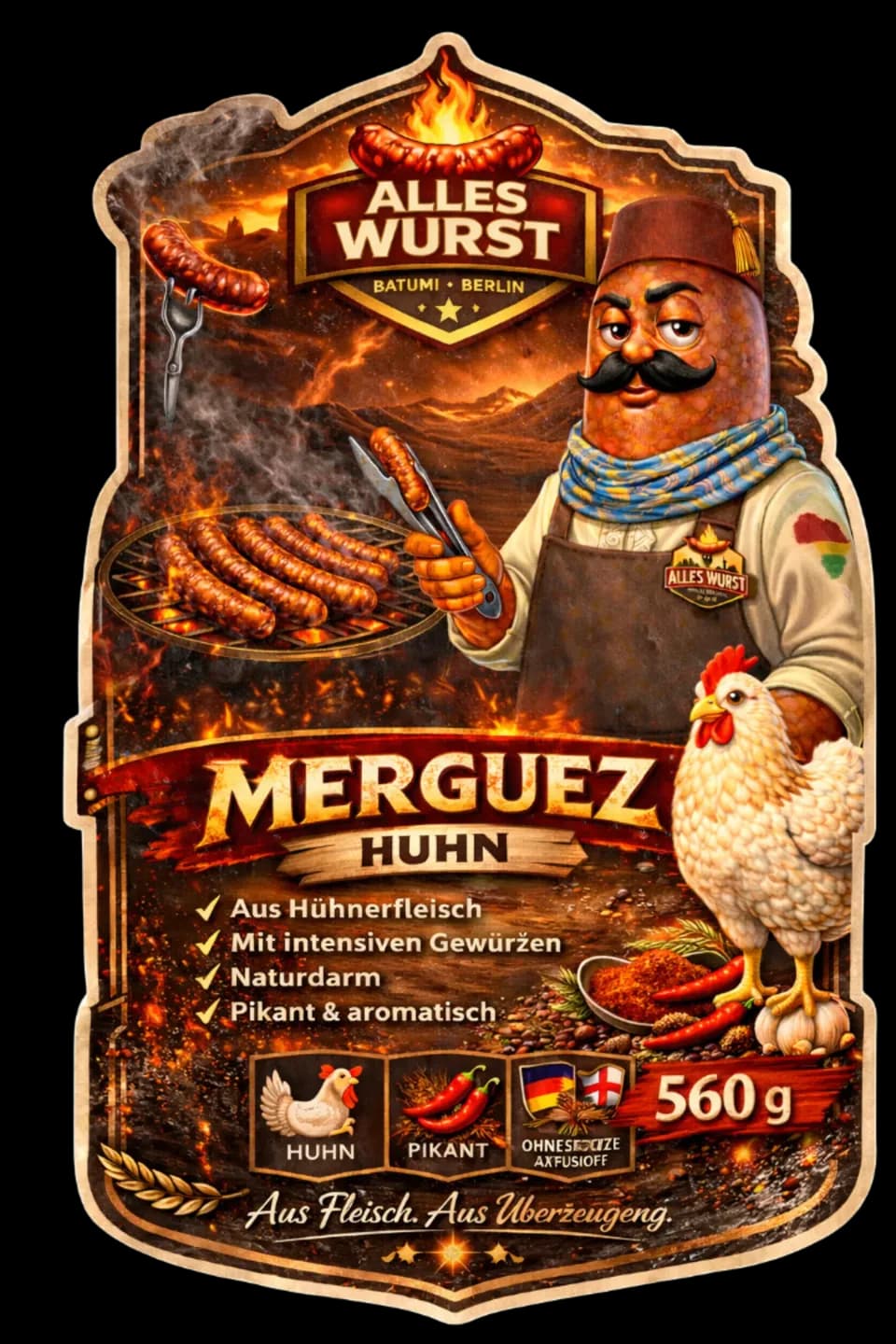
balancedMerguez Beef-Chicken Mix
A balanced beef–chicken blend — combining depth and lightness, crafted for structure, not excess.
North Africa, reinterpreted in Adjara
North African fire culture, reworked through Batumi with lamb-, beef-chicken mix, and Adjarian adjika.
Merguez comes from North African market and street culture, where lamb, spice, and open fire define the meal. It entered Europe through migration and kept its character: direct, hot, aromatic, and social.
This family was never meant to be mild. It exists to carry heat, depth, and color. In the Alles Wurst lineup it becomes the international voice with a regional answer: original Adjarian adjika instead of anonymous harissa.
Lamb-, or beef-chicken mix, garlic, paprika, chili, cumin, coriander, and slim natural casing. Thin format, fast response to heat, and spice that should define the product rather than decorate it.
Take it into flatbread, shakshuka, tomato pans, or direct grill service. It can hold stronger combinations without losing its own identity.
Tomato, yogurt-herb sauce, or more adjika. Merguez should remain the loudest note in the dish.
Variants you can actually buy
Adjika. Light.
balancedA balanced beef–chicken blend — combining depth and lightness, crafted for structure, not excess.
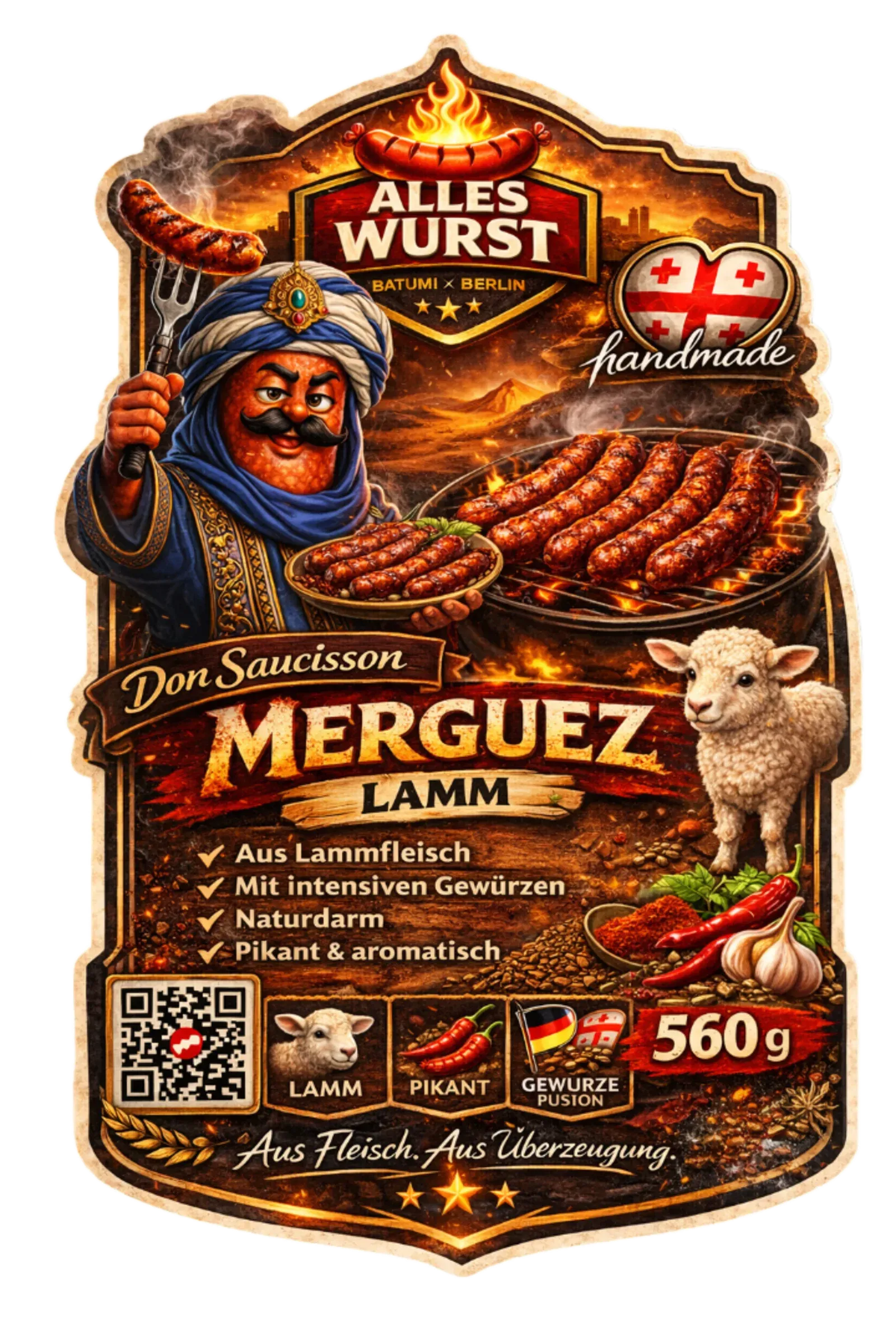
Adjika. Lamb.
boldNorth African fire translated through Adjarian adjika, lamb depth, and thinner natural casing.