

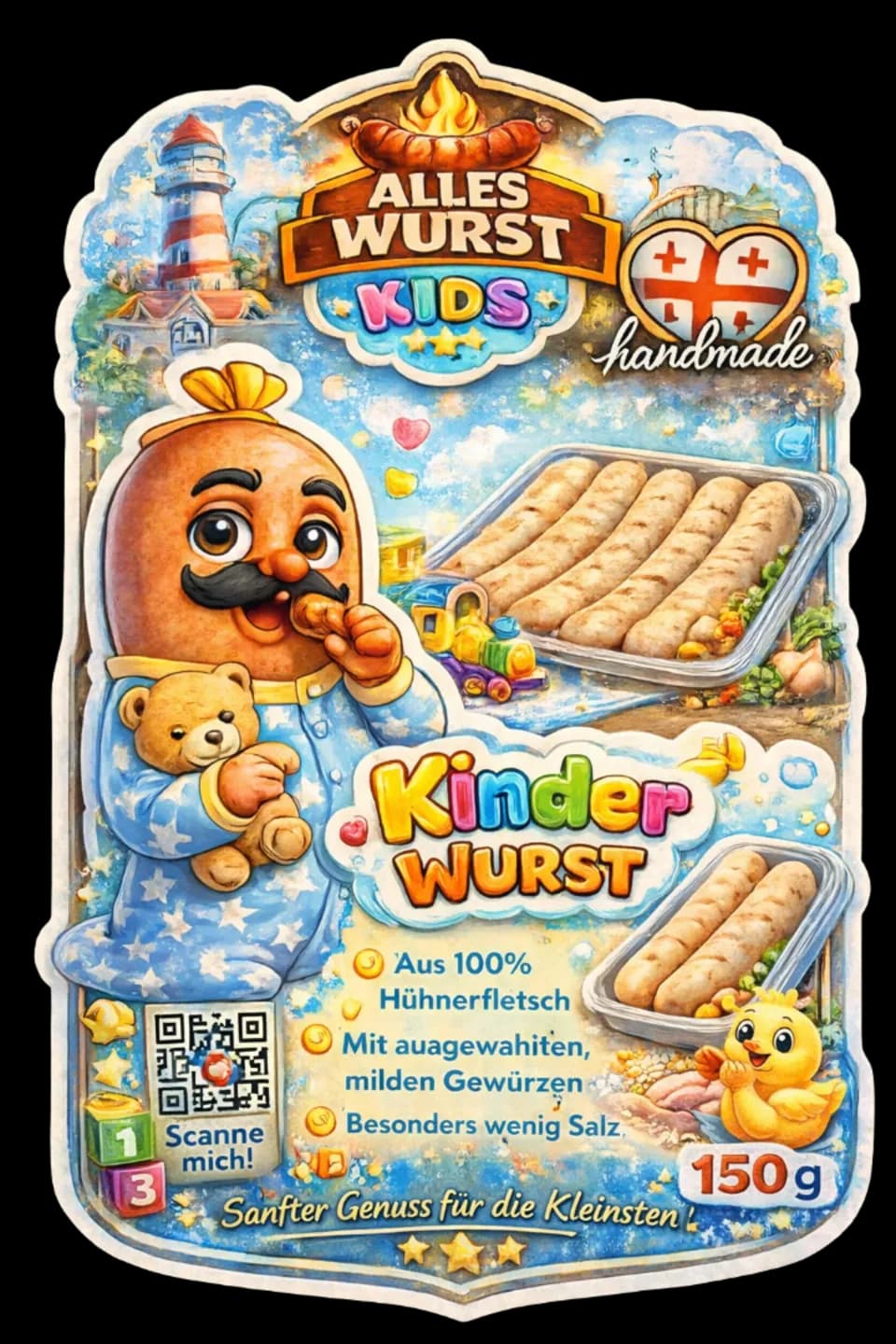
For families.
mildKinderwurst Chicken
Reduced salt, mild spice, clean chicken, and a shape children accept immediately.
Vienna and the Central European Bruehwurst tradition
Fine, quiet, and everyday-reliable: the balanced classic of Central European sausage culture.
Wiener Wurst grew out of nineteenth-century urban food culture. It was designed for tenderness, balance, and repeatability, then became part of breakfast tables, stations, buffets, takeaways, and homes across generations.
What defines Wiener is restraint. No sharp smoke, no dominant spice, no performance. Its value lies in clean emulsion, gentle seasoning, and the fact that it fits almost any everyday meal without friction.
Bruehwurst discipline, fine casing, careful seasoning, and a mild profile that lets meat and texture stay visible. This family wins by precision, not by volume.
Serve it pure with mustard, in bread as a street basic, sliced into a cheese melt, with potato salad, or as a warm classic plate with mash and kraut.
Mustard, honey mustard, or a light adjika accent. The family should stay calm and balanced.
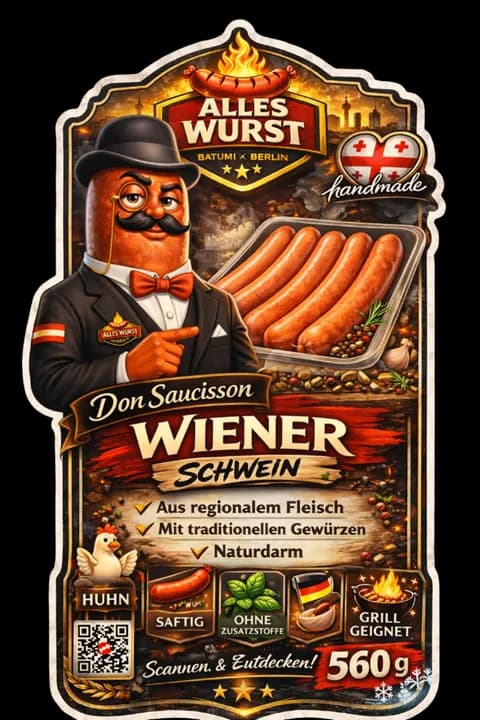
Variants you can actually buy
For families.
mildReduced salt, mild spice, clean chicken, and a shape children accept immediately.
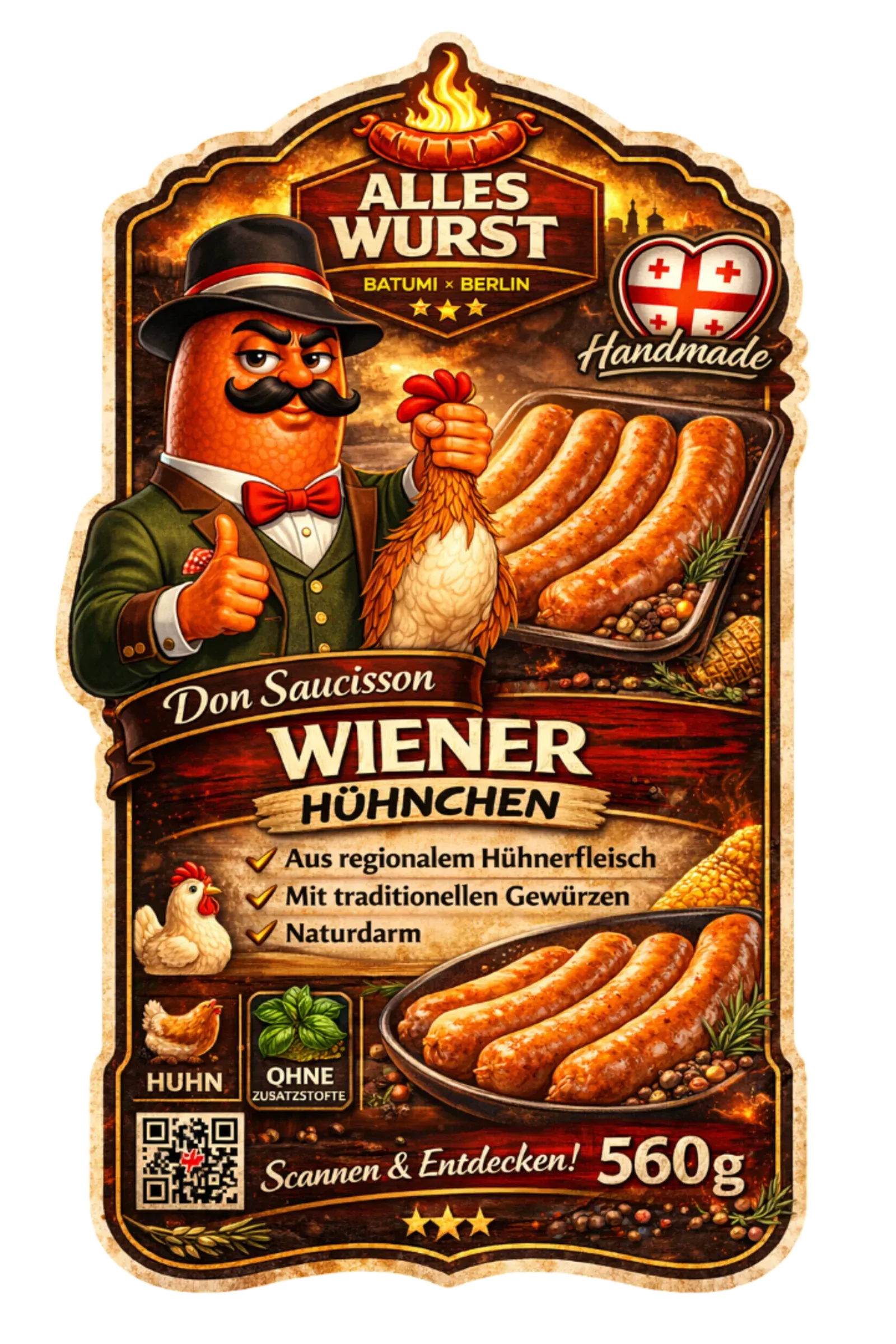
Fine. Light.
mildChicken Wiener in lamb casing: lighter, finer, and clean enough for modern everyday eating.
Quiet classic.
mildQuiet, balanced, and precise. A proper Wiener built for mustard, bread, breakfast, or potato salad.